
Razer's $200 Tartarus Keypad Has Great Switches, Buggy Software
The Tartarus V2 Pro nails its analog optical switches and ergonomic wrist rest, then undercuts itself with a thumbstick that can't tell up from forward.
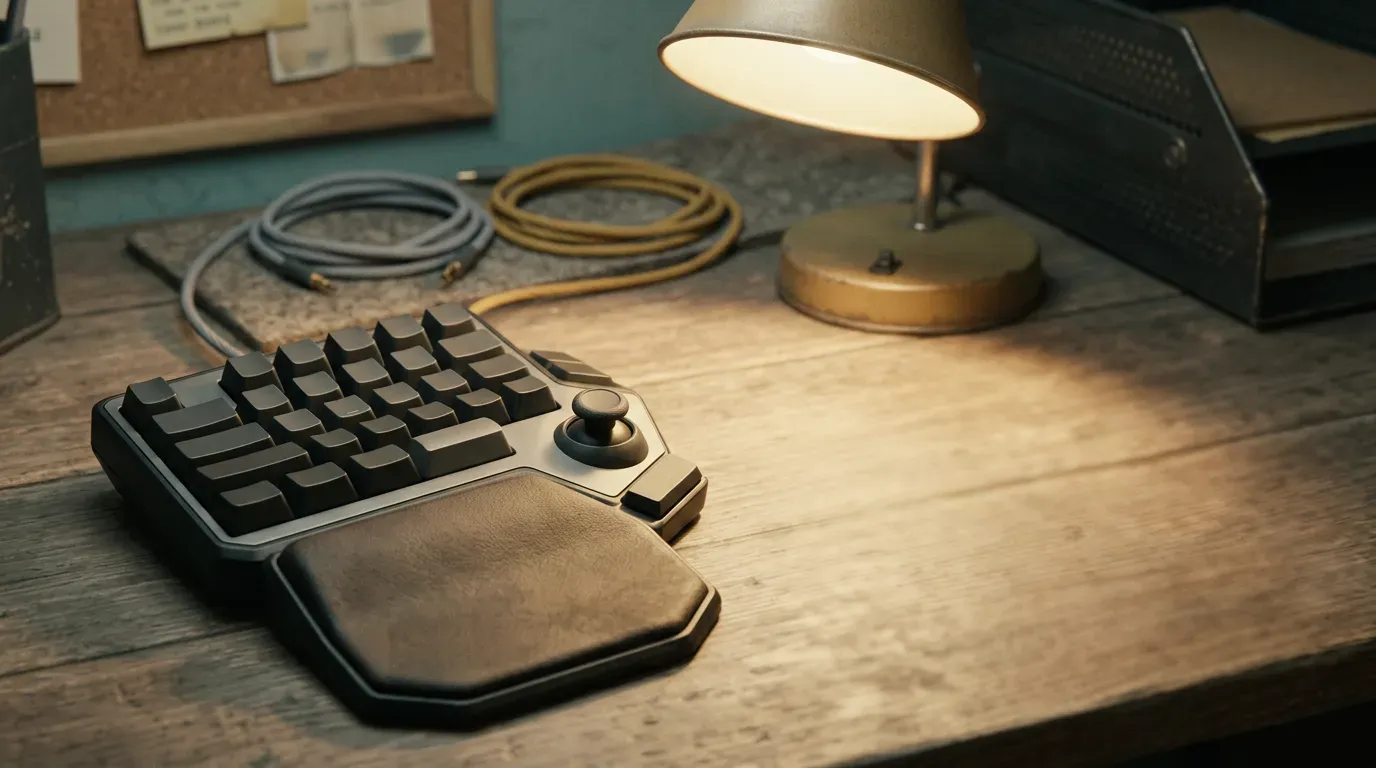
Thirteen years and $120 separate the first Razer Tartarus from this one. The original shipped in 2013 for $79.99, and every sequel since has crept the price up a notch (Chroma, V2, Pro) until the V2 Pro lands at $199.99, more than double what the line cost a decade ago for what is still, fundamentally, a 27-key MMO keypad with a thumbstick bolted on. Whether that math works for you depends entirely on how much you value Razer's analog optical switches, because those switches are the one part of this review I have zero complaints about.
The Gen-2 analog optical switches under all 27 keys deliver genuinely adjustable actuation, the kind where you can dial sensitivity per key instead of accepting whatever a manufacturer decided was 'optimal.' Bind the W key to a gradual accelerator in Euro Truck Simulator 2 and you get an honest analog creep instead of a binary stomp. That's not marketing copy, that's a measurable behavior change at the switch level, and it's the first time a keyboard-shaped device has made me care about actuation depth instead of rolling my eyes at the spec sheet.
The wrist rest earns its keep too: two adjustment buttons, faux leather that doesn't feel like it's auditioning for a landfill in six months, and a curved layout that beats every keyboard-and-rest combo I've used for comfort. Double-shot PBT keycaps won't fade, Rapid Trigger resets inputs on the smallest upward motion, and Snap Flex lets you bind a second action to the key release, features that happen to double as genuine accessibility wins for players managing joint or dexterity limits, not just esports flex.
Then there's the TMR thumbstick, which is where Razer's software team owes everyone an apology. Push the stick toward your monitor expecting 'forward' and the Tartarus V2 Pro reads it as 'right.' You have to point the thing straight up, vertically, to register forward movement, a mapping error that Valve solved years ago in Steam Input and that Razer somehow shipped anyway. The stick also defaults to acting as a controller's right stick despite sitting under the hand that's always handled movement, so unless your game has a southpaw option, it's dead weight on day one. Toss in a backlighting timeout that refuses to trigger because it thinks your actual keyboard is still 'in use,' and the HyperShift button that kills your RGB lighting on every press no matter what you bind it to, and you've got a hardware triumph wearing a firmware straitjacket.
None of that is unfixable. A Synapse patch could sort the thumbstick orientation in an afternoon, and Razer says it's working on it. Until that patch lands, you're paying $199.99 for switches that belong in a flagship keyboard attached to a thumbstick that doesn't know which way is up, literally.